

THCa decarboxylation is the heat-driven chemical process that transforms non-intoxicating THCa (tetrahydrocannabinolic acid) into THC, the compound responsible for cannabis’s psychoactive effects. When you vape THCa flower or concentrates, your device applies precisely controlled heat that breaks off a carboxyl group from the THCa molecule, activating it in real time as you inhale. Understanding this conversion matters because it directly affects your experience, dosage control, and choice of device, which is why selecting from the best THCA vapes 2026 can deliver optimal results.
Many people in our community discovered vaping after realizing that eating raw THCa flower produces no high, while heating that same flower unlocks its full potential. The difference comes down to temperature. Decarboxylation begins around 220°F but reaches optimal efficiency between 315°F and 440°F, which is exactly where quality vaporizers operate. Too cool and you waste product; too hot and you risk combustion or degrading cannabinoids into less desirable compounds.
This guide breaks down what happens inside your vape chamber at a molecular level, explains how different device types manage decarboxylation differently, and gives you practical benchmarks for temperature settings. Whether you’re switching from smoking or fine-tuning an existing vape routine, you’ll learn how to maximize THCa conversion while preserving flavor and avoiding the harshness of combustion. We’ve gathered input from experienced vapers who’ve tested various approaches, so you can make informed choices about hardware, temperature ranges, and technique based on real-world results.
What THCa Is and Why It Needs Activation
When you pick up fresh cannabis flower, you’re not holding THC, you’re holding THCa. The raw plant doesn’t produce the psychoactive compound we commonly associate with cannabis until something triggers the transformation. That “something” is heat, and it’s precisely why understanding THCa matters if you’re considering vaping as your method of consumption.
THCa, or tetrahydrocannabinolic acid, exists abundantly in living and freshly harvested cannabis plants. It’s what chemists call a cannabinoid acid, essentially the precursor molecule that becomes THC when exposed to sufficient heat. In this raw form, THCa is non-psychoactive, meaning you could consume it directly without experiencing the typical cannabis high. The molecular structure includes an extra carboxyl group, a cluster of carbon, hydrogen, and oxygen atoms, that prevents the compound from binding effectively to the CB1 receptors in your brain that create psychoactive effects.
- THCa (Tetrahydrocannabinolic Acid)
- The raw, non-psychoactive form of THC found naturally in fresh cannabis plants. It requires heat to convert into the active compound.
- THC (Tetrahydrocannabinol)
- The psychoactive cannabinoid responsible for the characteristic cannabis high, created when THCa loses its carboxyl group through heating.
- Psychoactive
- A substance’s ability to affect mental processes, mood, or consciousness by interacting with brain receptors. THCa lacks this property until converted to THC.
- Cannabinoid Acid
- The acidic precursor forms of cannabinoids found in raw cannabis, including THCa and CBDa, which become active through decarboxylation.
This is where vaping enters the picture. Your vape device isn’t just a delivery method, it’s a precision tool engineered to apply controlled heat that strips away that carboxyl group and activates the THCa into THC. Without this conversion, you’d be inhaling vapor with minimal psychoactive potential. Vape hardware is specifically designed with temperature control features and heating elements calibrated to facilitate this transformation efficiently, giving you consistent effects with each session while avoiding the byproducts of combustion that come with traditional smoking.
How Decarboxylation Works in Your Vape
The Temperature Sweet Spot
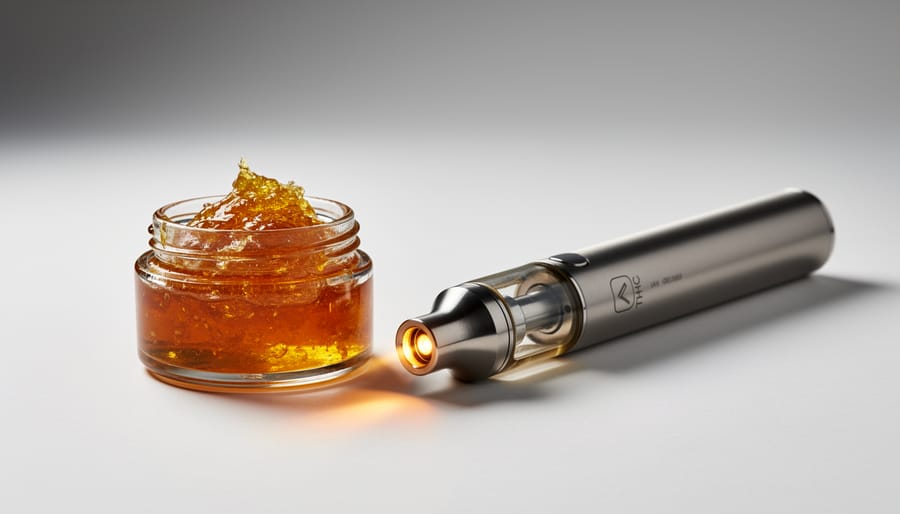
The magic happens between 220°F and 315°F (104°C to 157°C), with most vapers finding their ideal spot around 315°F to 365°F (157°C to 185°C) for optimal THCa conversion without degradation.
Below 220°F, your device simply won’t generate enough heat to trigger decarboxylation. You’ll get vapor and flavor, but the THCa remains mostly inactive. You’re essentially warming your material without unlocking its effects. This is frustrating for users who can’t figure out why they’re not feeling anything despite inhaling visible vapor.
Push past 400°F (204°C), and you risk combustion territory. At these temperatures, you’re not just converting THCa anymore. You’re breaking down cannabinoids, destroying terpenes, and creating harsh smoke instead of clean vapor. The taste turns acrid, and you lose the smooth experience that makes vaping preferable to smoking.
Start at 350°F (177°C) if your device has precise controls. This gives you reliable decarboxylation with preserved flavor. From there, adjust up or down 10-15 degrees based on your material and desired intensity. Concentrates often benefit from slightly higher temps (365°F-380°F), while flower performs well at the lower end of the range.
What Happens at the Molecular Level
Think of THCa as a locked box containing THC. The “lock” is a carboxyl group, a cluster of carbon, hydrogen, and oxygen atoms attached to the THC molecule. When your vape heats the material to around 220-315°F, this cluster breaks away as carbon dioxide (CO2), literally floating off as vapor. What’s left behind is pure, activated THC that can now interact with receptors in your body.
The transformation happens almost instantly at proper temperatures. Picture a spring compressed inside that locked box: once the heat pops the lock (removes the carboxyl group), the spring releases its potential energy. That’s essentially what’s happening chemically, you’re not adding anything new, just removing what was blocking the compound’s natural activity. This is why precision temperature control matters: you need enough heat to snap that molecular “lock” without burning the contents inside.
Types of Vaping Hardware for THCa
Dry Herb Vaporizers
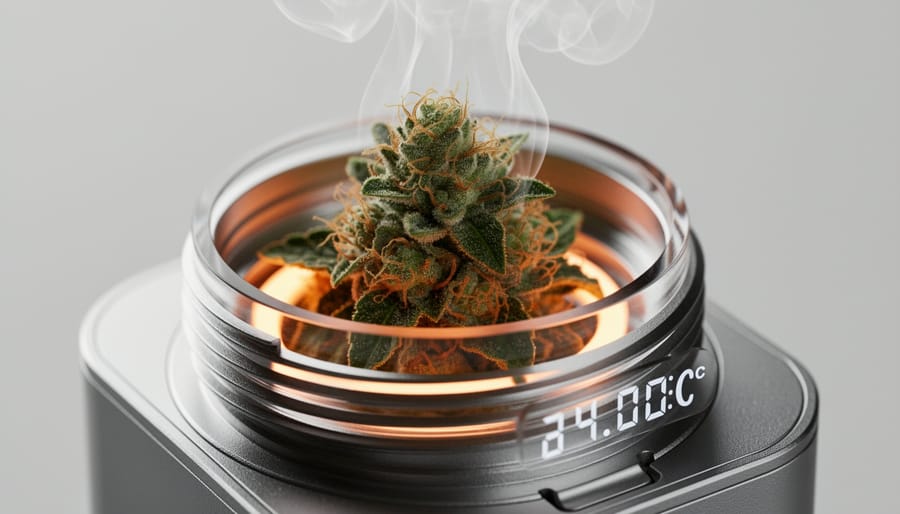
Dry herb vaporizers heat cannabis flower directly, making them ideal for users who prefer the full-plant experience. These devices work through two primary heating methods: conduction and convection. Conduction vaporizers heat the flower by direct contact with a heated chamber, think of a pan on a stove. They heat up quickly and are usually more affordable, but they can create hot spots if you don’t stir the bowl occasionally. Convection vaporizers pass hot air through the flower instead, heating it more evenly without direct contact. This method typically produces more consistent decarboxylation across your material, though these devices often cost more and take slightly longer to reach operating temperature.
Both methods work for THCa conversion, but convection tends to be more efficient because the even heat distribution ensures more complete decarboxylation throughout the chamber. Most quality dry herb vapes let you adjust temperature settings between 320°F and 430°F, giving you control over how thoroughly the THCa converts and what other compounds you extract from the flower.
Concentrate and Wax Devices
Concentrate pens and dab devices deliver THCa-rich extracts, waxes, shatters, and live resin, directly to a heating element that reaches decarboxylation temperatures almost instantly. These devices use metal coils (typically quartz, ceramic, or titanium) housed in small chambers that vaporize concentrates on contact.
Quartz coils heat rapidly and provide clean flavor, making them popular for terpene-rich THCa extracts. Ceramic coils heat more slowly but maintain stable temperatures, which helps prevent overheating and degradation of active compounds. Titanium offers durability and fast heat-up times, though some users report a slight metallic taste.
The chamber design matters significantly. Shallow quartz buckets or “bangers” in dab rigs allow you to see the concentrate vaporizing and control application timing. Deep ceramic chambers in portable pens provide more even heating but require you to trust the device’s temperature settings.
Most quality concentrate devices offer adjustable voltage or temperature presets. Starting at lower settings (around 315-350°F) preserves more terpenes and provides smoother vapor, while higher settings (400-450°F) produce denser clouds and faster decarboxylation. Loading small amounts, roughly rice-grain sized, ensures complete vaporization without waste and prevents clogging.
Practical Applications and Uses
Understanding how THCa decarboxylation works transforms vaping from guesswork into a repeatable, efficient process. Once you know the science, you can plan sessions that deliver consistent effects while maximizing your material.
Session planning starts with recognizing that different temperatures produce different experiences. Many vapers begin at 350°F to preserve flavor and gradually increase to 380°F as the session progresses, ensuring complete decarboxylation while extracting a fuller cannabinoid profile. This stepped approach prevents wasted material and gives you control over intensity. One community member shared how switching to temperature control cut their weekly consumption by nearly 40 percent because they stopped accidentally burning through bowls at excessively high settings.
Dosage becomes more predictable when you understand the conversion process. If you know your THCa concentrate contains 80 percent THCa by weight, you can calculate that proper decarboxylation converts roughly 87.7 percent of that mass into THC. This math helps experienced users dial in precise doses, especially when microdosing or managing tolerance. Beginners benefit from starting low and learning how their device’s specific heating pattern affects the end result.
Efficiency tips center on avoiding common mistakes. Packing your chamber too tightly restricts airflow and creates uneven heating, leaving pockets of unconverted THCa. Conversely, under-packing wastes the heating element’s potential. Finding the right balance for your specific device takes a few sessions, but the payoff is significant. Understanding Ohm’s Law becomes relevant when using advanced mods, as coil resistance directly impacts how quickly and evenly your device reaches decarboxylation temperature.
Battery charge matters more than most realize. A depleted battery can’t maintain the consistent heat needed for complete decarboxylation, leading to weak effects and confusion about what went wrong. Several vapers noted in our forums that keeping a backup battery or charging between sessions eliminated their “inconsistent high” complaints entirely.
Track your sessions for a week. Note temperature settings, material type, and perceived effects. Patterns emerge quickly, and this data helps you refine your approach until every session hits exactly how you want it.
Getting Started: Setting Up for Proper Decarboxylation
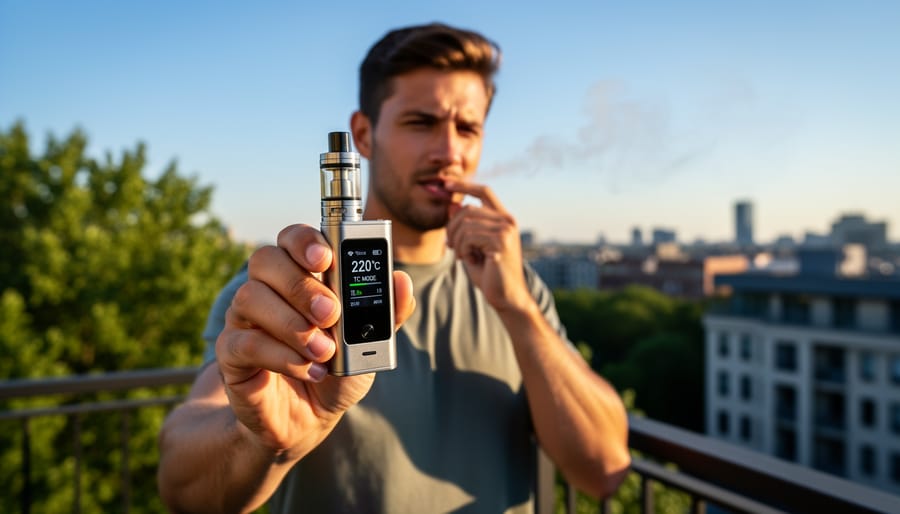
Starting your THCa vaping journey doesn’t require advanced knowledge, just a methodical approach and patience while you learn.
Choose a device with adjustable temperature settings as your first priority. Variable voltage mods or dry herb vaporizers with digital displays give you control over the decarboxylation process rather than leaving it to guesswork. If you’re working with flower, a device that heats between 320°F and 430°F covers the full range you’ll need. Concentrate users should look for pens with similar precision.
Before your first session, grind your flower to a medium-fine consistency if using a dry herb vaporizer. Don’t pack the chamber too tightly, airflow matters for even heating and complete decarboxylation. With concentrates, use a rice-grain-sized amount to start. You can always add more once you understand how your device performs.
Set your temperature to 365°F for your initial sessions. This middle-range setting ensures decarboxylation happens without risking combustion, and it’s forgiving while you’re developing technique. Let the device reach temperature fully before drawing, most vaporizers signal when they’re ready.
Your first inhales might feel different from smoking. Take slow, steady draws rather than quick puffs, and focus on proper puffing technique to maximize vapor production. You’ll notice the flavor is cleaner and the effects come on more gradually than with combustion.
Don’t expect perfection immediately. Your first few sessions teach you how your specific device behaves, how different temperatures affect flavor and potency, and what draw speed works best. Keep sessions short initially, five to seven draws, so you can gauge effects without overdoing it.
Track what works: which temperature produced the best results, how much material you used, and how long each session lasted. These notes become your personal guide as you refine your approach and build confidence with the process.
Common Questions About THCa Vaping
As you get comfortable with THCa vaping, certain questions come up again and again in our community forums. Newcomers especially wonder whether they’re doing it right, and even experienced vapers occasionally troubleshoot inconsistent sessions. Here’s what we hear most often, along with practical answers drawn from real user experiences.
How do I know if I’m using the right temperature?
If you’re getting the expected effects and your material turns a light to medium brown (not black or green), your temperature is likely correct. Start at 365°F and adjust up or down based on vapor production and how you feel.
Can I overdo the decarboxylation process?
Yes, temperatures above 450°F can degrade THC into CBN and other byproducts, reducing potency and altering effects. Staying within 365-430°F prevents this breakdown while ensuring complete conversion.
Why does my choice of device make such a difference?
Devices with precise temperature control maintain the consistent heat needed for reliable decarboxylation, while cheaper units fluctuate wildly and produce uneven results. Battery quality directly impacts heating stability, which is why understanding vape battery basics matters for THCa products.
Is vaping actually more efficient than smoking for activating THCa?
Absolutely. Combustion destroys a significant portion of cannabinoids through excess heat, whereas controlled vaporization converts THCa to THC without burning it away, meaning you use less material for comparable effects.
Battery performance deserves special attention because weak or aging cells can’t hold the voltage needed for stable heating. If your sessions feel inconsistent or your device struggles to reach set temperatures, check your battery health first. For those using removable-cell mods, reviewing 18650 safety tips helps you maintain reliable power delivery.
Different strains and product forms also affect your experience. High-resin concentrates decarboxylate faster than dry flower because the THCa is more densely packed and exposed. Fresh flower with higher moisture content takes slightly longer to heat through than cured material. You’re not doing anything wrong if a new strain behaves differently, just give yourself a session or two to dial in the ideal settings for that particular product.
Understanding THCa decarboxylation isn’t just chemistry trivia, it’s the foundation for getting consistent, controlled experiences from your vape. When you know how your device transforms inactive THCa into active THC, you’re no longer guessing. You can dial in the right temperature, choose hardware that matches your material, and troubleshoot issues when results don’t meet expectations.
This knowledge puts you in control. You’ll waste less product, avoid the harshness of accidental combustion, and get the effects you’re actually looking for. Whether you’re switching from smoking or refining your current setup, the principles stay the same: proper heat application converts THCa efficiently and safely.
As you continue exploring vaping, lean on the detailed hardware guides and community experiences available throughout this site. Real users have walked this path, tested countless devices, and shared what actually works. Your vaping journey gets easier when you understand the science behind it and connect with others who’ve figured out the practical details. Start with the right information, and everything else falls into place.


 Our mission in Vape Batteries & Hardware is to let people find a better and safer option for smoking.